Kai Neumann · 27 September 2026
Decoding Soil Microbe Shifts as Indicators of Long-Term Stability in Isolated Pond Ecosystems Like Havenpond
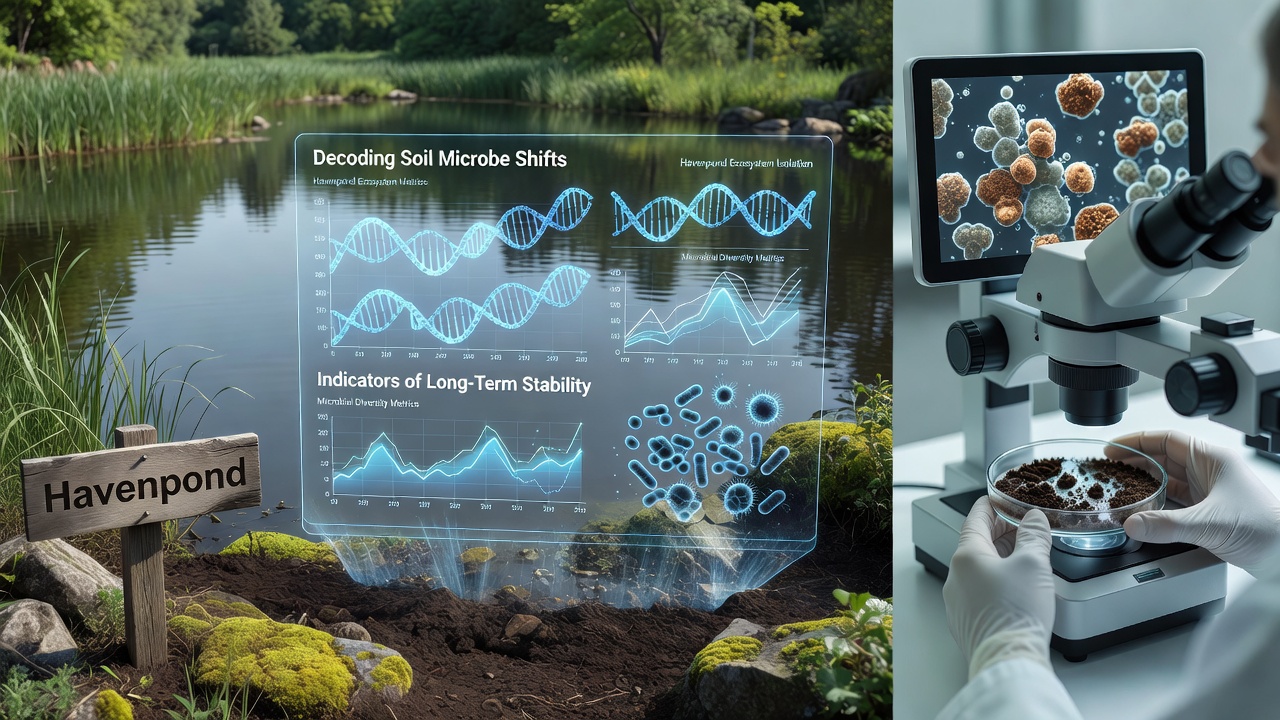
Soil microbe communities in isolated pond systems function as sensitive recorders of environmental conditions because they respond rapidly to changes in nutrient availability, water chemistry, and organic matter inputs. Researchers have documented how shifts in bacterial and fungal populations correlate with broader indicators of ecosystem resilience, particularly in ponds that receive limited external water exchange. Data from long-term field studies show that certain taxa increase or decline in predictable sequences when ponds experience sustained alterations in pH, dissolved oxygen, or sediment composition. Havenpond serves as a representative example of such isolated systems, where monitoring programs track microbial composition across multiple seasons. Scientists collect soil cores from littoral zones and analyze them using DNA sequencing techniques that identify dominant phyla such as Proteobacteria, Actinobacteria, and Ascomycota fungi. These analyses reveal that stable ponds maintain consistent ratios of nitrogen-fixing bacteria to decomposers, whereas ponds undergoing gradual eutrophication display rising abundances of sulfate-reducing species.Mechanisms Linking Microbial Composition to Ecosystem Stability
Microbial functional groups drive nutrient cycling processes that directly influence water clarity and plant community structure in pond environments. When populations of methane-oxidizing bacteria remain balanced with methanogenic archaea, researchers observe lower rates of greenhouse gas release and more consistent carbon storage in sediments. Conversely, dominance by anaerobic fermenters often coincides with increased organic loading and reduced biodiversity in macroinvertebrate communities.
Studies conducted across multiple geographic regions demonstrate these patterns through repeated sampling campaigns. According to information published by the United States Environmental Protection Agency, microbial indicators in freshwater wetlands provide earlier signals of stress than measurements of water chemistry alone. Similar findings appear in reports from the European Environment Agency, which emphasize the value of combining microbial data with traditional limnological parameters.
Monitoring Approaches Applied at Havenpond
Field teams at Havenpond employ a combination of culture-independent sequencing, phospholipid fatty acid profiling, and enzyme activity assays to characterize soil communities. Sampling occurs at fixed transects during spring, summer, and autumn to capture seasonal variation while minimizing disturbance to sediment structure. In September 2026, the program expanded to include monthly winter collections, allowing comparison of cold-season microbial dynamics with historical baselines established since 2018.
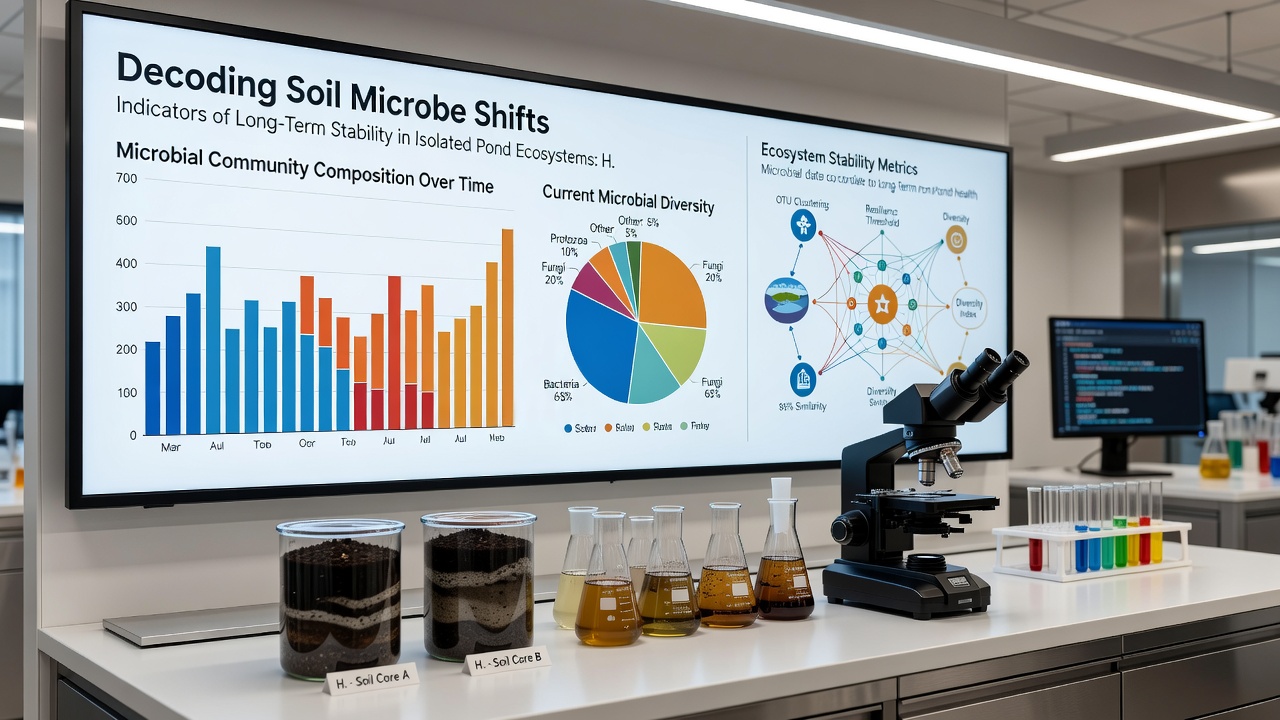
Results from these efforts indicate that ponds maintaining long-term stability exhibit higher evenness in microbial operational taxonomic units, whereas sites showing early signs of imbalance display reduced evenness accompanied by blooms of specific indicator species. One study revealed that a 15 percent increase in certain Gammaproteobacteria preceded measurable declines in submerged macrophyte cover by two growing seasons.
Patterns Observed Across Comparable Isolated Systems
Comparative work on other remote pond networks in North America and Australia confirms that microbial shifts follow similar trajectories when hydrology and land use remain constant. Ponds with intact surrounding vegetation buffers retain diverse fungal communities that contribute to phosphorus immobilization, while those adjacent to agricultural fields experience elevated ratios of copiotrophic bacteria. These observations arise from coordinated research networks that share standardized protocols and reference databases.
Researchers note that isolated ponds function as natural laboratories because external inputs remain minimal, allowing clearer attribution of internal processes to observed changes. Soil core archives collected over decades now permit retrospective analysis that links past microbial states to present-day vegetation and water quality metrics.
Conclusion
Soil microbe shifts supply measurable signals that help track long-term stability in isolated pond ecosystems such as Havenpond. Continued integration of genomic, biochemical, and hydrological datasets strengthens the capacity to detect early departures from baseline conditions. Ongoing programs that began expanded sampling in September 2026 will supply additional records for validating these relationships across future seasons.