Alex Keller · 10 October 2026
How Microclimate Fluctuations Influence Plant Succession Patterns in Secluded Freshwater Habitats
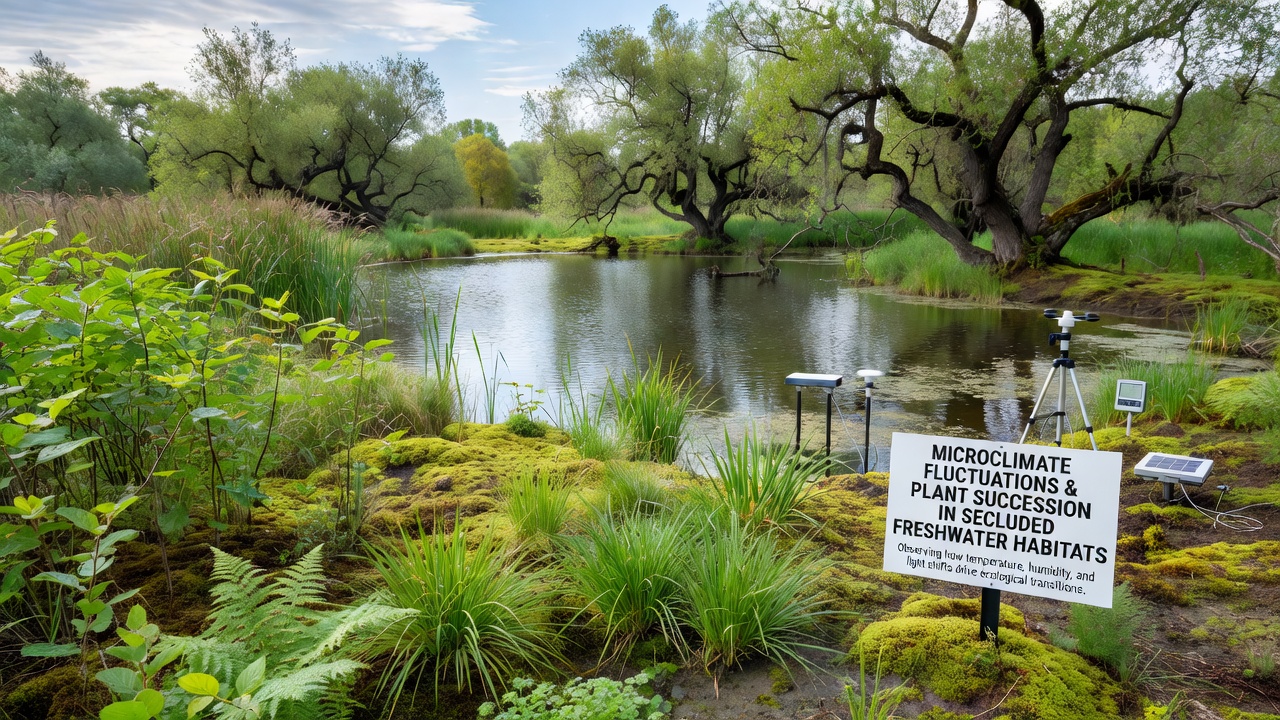
Secluded freshwater habitats such as isolated ponds and small lakes experience microclimate fluctuations that directly alter the pace and direction of plant succession, with temperature swings, humidity shifts, and localized light patterns reshaping which species establish and replace one another over time. Researchers track these changes through repeated field measurements that capture daily and seasonal variations within the immediate vicinity of the water body rather than relying on broader regional climate data.
Defining Microclimate Conditions in Isolated Water Bodies
Microclimates around secluded freshwater sites arise from interactions among water surface evaporation, surrounding vegetation canopy, and topographic sheltering that create pockets of cooler or warmer air than conditions just a few hundred meters away. Data from long-term environmental monitoring programs show that daily temperature ranges in these settings can differ by several degrees Celsius compared with open landscape stations, while humidity levels remain elevated near the water edge during morning hours before solar heating increases evaporation rates. These localized conditions influence seed germination timing and seedling survival rates for both aquatic and riparian plant species.
Plant Succession Sequences in Freshwater Margins
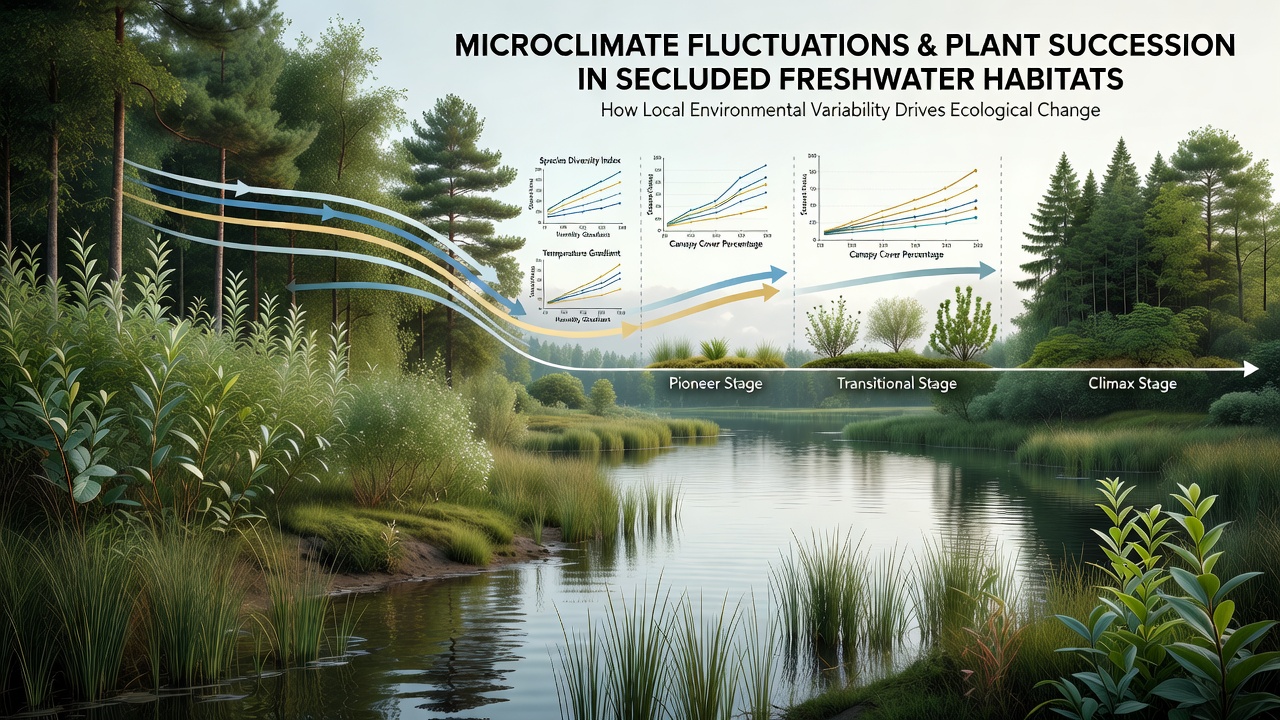
Plant succession in these habitats typically begins with pioneer aquatic species such as submerged macrophytes that stabilize sediments and alter water chemistry, followed by emergent plants that colonize shallower zones and eventually transition toward woody riparian vegetation on the banks. Studies conducted across multiple continents indicate that succession proceeds in stages where each community modifies the microclimate for the next group, with early colonizers often increasing shade and reducing wind exposure at the surface. This sequential replacement continues until a relatively stable assemblage develops, although external disturbances can reset portions of the process.
Temperature and Humidity Effects on Species Replacement
Fluctuations in near-surface temperatures affect metabolic rates and dormancy periods for many wetland plants, with warmer microclimate pockets accelerating growth of thermophilic species while cooler pockets favor those adapted to lower thermal thresholds. Research indicates that elevated humidity near pond edges reduces transpiration stress for young shoots during establishment phases, yet sudden drops in relative humidity during afternoon heating periods can increase mortality among seedlings that lack sufficient root systems. Observers note that these combined factors frequently lead to shifts in dominance from floating-leaved plants toward more drought-tolerant emergent species when microclimate variability intensifies.
Light Availability and Wind Patterns as Succession Drivers
Variable light penetration caused by changing canopy cover or water level fluctuations modifies photosynthetic efficiency across different strata of vegetation, allowing shade-tolerant species to replace sun-adapted pioneers as taller plants develop. Wind patterns within sheltered basins further influence pollination success and seed dispersal distances, with reduced airflow concentrating seeds near parent plants while occasional gusts redistribute them across the habitat. Data collected through October 2026 from instrumented sites in both North American and Australian freshwater systems reveal that stronger wind events correlate with increased colonization by wind-dispersed species in previously stable zones.
Monitoring Approaches and Regional Data Comparisons
Long-term monitoring networks operated by agencies such as the USGS National Wetlands Research Center combine sensor arrays with periodic vegetation surveys to quantify how microclimate variables correlate with changes in species composition. Similar programs run by Environment and Climate Change Canada and the European Environment Agency have documented parallel patterns in boreal and temperate zones, where increased microclimate variability accelerates transitions from herbaceous to shrub-dominated communities. These datasets allow researchers to compare succession rates across latitudes and identify thresholds where small temperature or humidity changes trigger larger community shifts.
Interactions with Water Level Dynamics
Water level changes interact with microclimate conditions to influence root zone moisture and oxygen availability, creating feedback loops that either promote or inhibit particular successional pathways. When microclimate warming coincides with lower water tables, aerobic conditions expand and favor terrestrial species encroachment into former wetland areas. Conversely, stable or rising water levels combined with cooler microclimates maintain anaerobic zones that support specialized aquatic flora for longer periods. Field observations from multiple isolated pond systems demonstrate that these interactions produce distinct zonation patterns visible from the water's edge outward.
Conclusion
Evidence from ongoing monitoring programs continues to show that microclimate fluctuations serve as key controls on the trajectory and speed of plant succession within secluded freshwater habitats, with temperature, humidity, light, and wind acting in concert to determine which species gain dominance at each stage. Regional comparisons highlight both common mechanisms and site-specific responses that depend on local topography and hydrology. Continued collection of integrated microclimate and vegetation data will refine predictive models for how these systems respond to broader environmental changes.