Viktor Peters · 21 November 2026
Investigating Detritivore Communities' Role in Sustaining Nutrient Balance Inside Secluded Freshwater Systems Like Havenpond
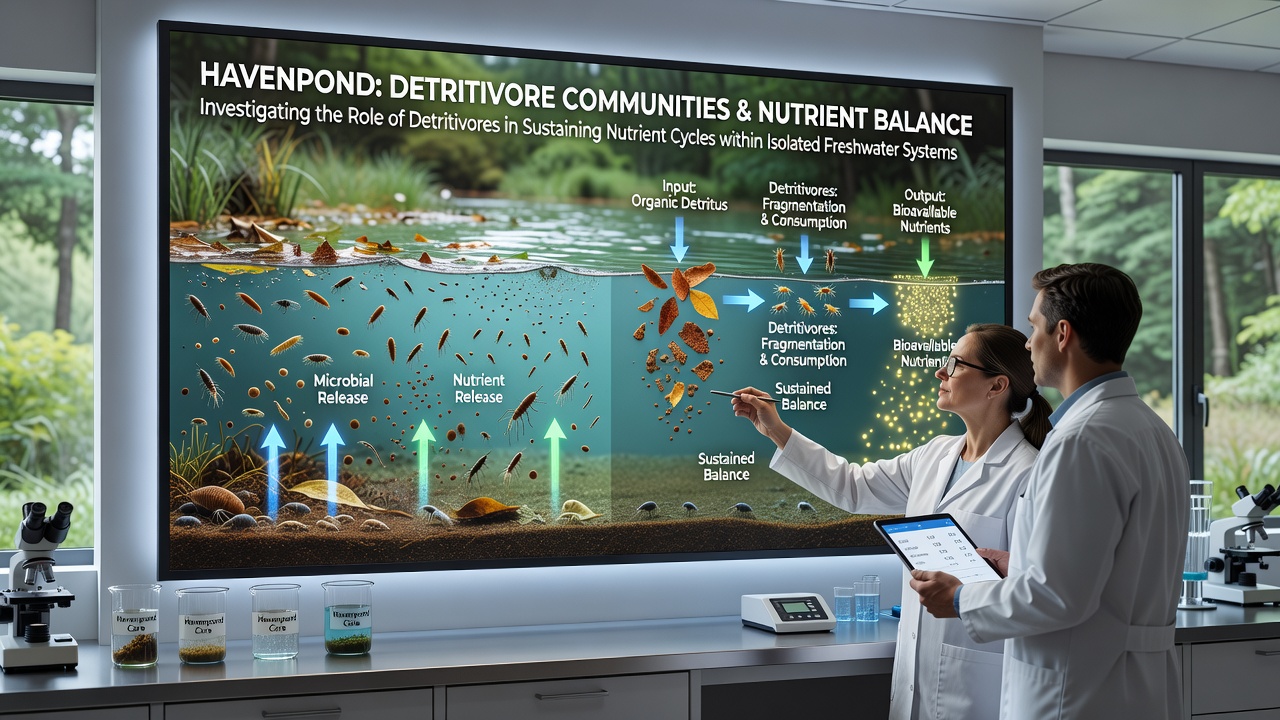
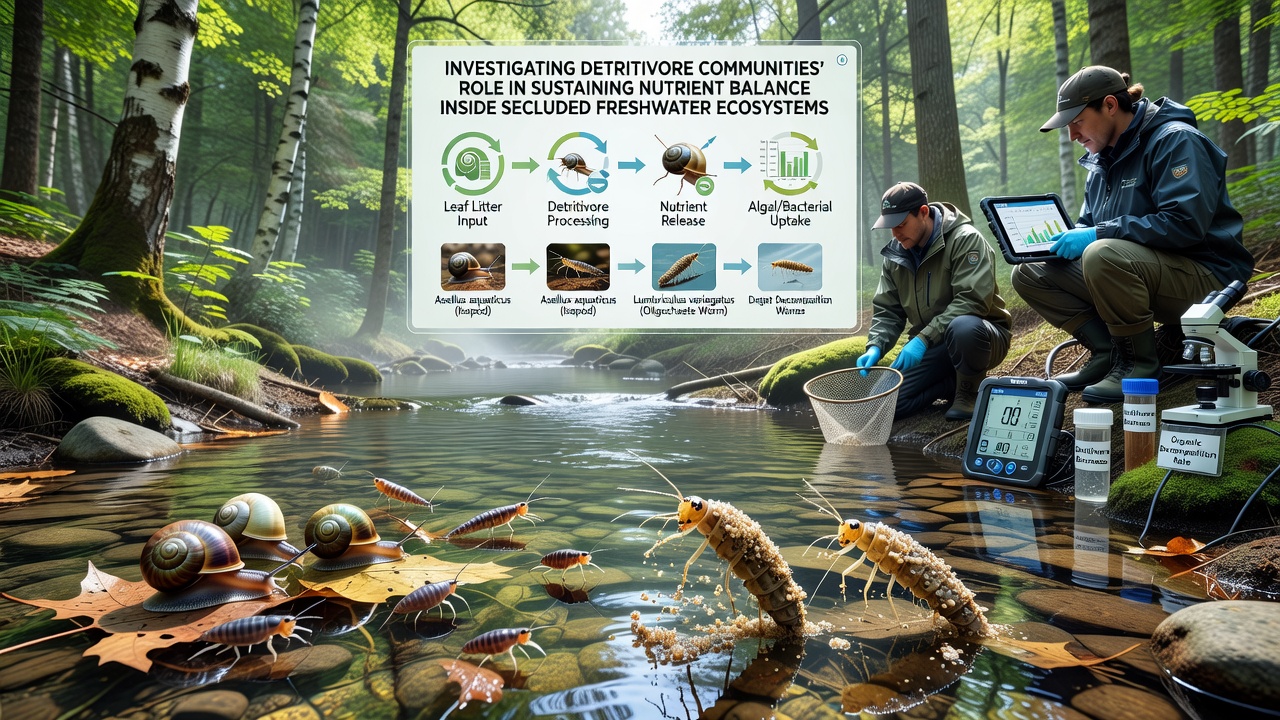
Secluded freshwater systems such as Havenpond rely on intricate biological processes to maintain chemical equilibrium, and detritivore communities form a central component of those cycles through their breakdown of organic matter. These organisms, including various insect larvae, annelids, and crustaceans, consume decaying plant and animal material that settles on pond bottoms, converting it into forms that other aquatic life can reuse. Monitoring programs have documented how this activity influences nitrogen, phosphorus, and carbon levels across different depths and seasons, particularly in enclosed habitats where external inputs remain limited.
Core Functions of Detritivores in Nutrient Cycling
Detritivores accelerate decomposition rates by fragmenting coarse detritus into smaller particles that bacteria and fungi colonize more readily, and this stepwise process releases dissolved nutrients back into the water column. Studies conducted in isolated ponds show that higher densities of shredder and collector species correlate with faster turnover of leaf litter and algal mats, which in turn supports primary production during periods of low external loading. In Havenpond specifically, researchers have tracked seasonal peaks in detritivore biomass during late summer and early autumn when accumulated organic inputs from surrounding vegetation reach their maximum.
Measurements taken at multiple sampling stations reveal that phosphorus remineralization occurs most actively in the top five centimeters of sediment where oxygen gradients allow both aerobic and anaerobic pathways to operate simultaneously. Nitrogen transformations follow similar patterns, with denitrification rates increasing in zones where detritivore burrowing enhances water exchange between the sediment and overlying water. These observations align with data collected by the United States Environmental Protection Agency through its freshwater ecosystem assessments, which emphasize teh importance of benthic invertebrate communities in regulating internal nutrient loads.
Methods Used to Assess Community Structure and Activity
Field teams employ a combination of sediment core sampling, stable isotope analysis, and in situ respiration chambers to quantify the contribution of detritivores to overall nutrient fluxes. Core samples undergo sieving and sorting to identify species composition and abundance, while isotope ratios in tissue and detritus help trace carbon and nitrogen pathways through the food web. Respiration chambers placed on the pond floor measure oxygen consumption and nutrient release over short incubation periods, providing direct estimates of community-level processing rates.
Long-term records from Havenpond indicate that community diversity remains relatively stable year to year despite fluctuations in water temperature and dissolved oxygen, yet shifts in dominant taxa occur when leaf litter inputs vary in quality. In November 2026, scheduled resampling will expand these datasets by incorporating DNA metabarcoding techniques that allow finer resolution of cryptic species within the detritivore guild.
Interactions with Other Biotic and Abiotic Factors
Detritivore activity does not occur in isolation, and interactions with microbial communities, macrophyte beds, and water chemistry modulate the outcomes of decomposition. Macrophyte stands supply both structural habitat and additional organic substrate, while microbial biofilms on detritus surfaces enhance the efficiency of invertebrate feeding. Observers note that periods of high primary production increase detrital quality, which subsequently boosts detritivore growth rates and nutrient excretion.
Physical factors such as water residence time and sediment grain size further shape community responses, with finer sediments supporting higher densities of burrowers that promote nutrient diffusion. Data compiled by Environment and Climate Change Canada through its national lake monitoring network demonstrate comparable patterns across multiple isolated basins, confirming that detritivore-mediated recycling becomes especially critical when external nutrient inputs decline.
Implications for Ecosystem Stability and Future Monitoring
Continued investigation of these communities provides baseline information needed to detect changes driven by climate variability or land-use alterations in surrounding catchments. Because Havenpond functions as a closed system with minimal surface inflow, internal recycling mechanisms determine much of its long-term chemical balance, and detritivores represent a measurable component of that balance. Expanded sampling arrays planned for the coming years will integrate automated sensors that record real-time oxygen and nutrient profiles alongside periodic biological surveys.
Conclusion
Research programs focused on secluded freshwater habitats continue to clarify how detritivore communities sustain nutrient balance through direct consumption and indirect stimulation of microbial processes. Findings from sites like Havenpond contribute to broader understanding of benthic-pelagic coupling in systems where external subsidies remain limited, and ongoing work scheduled through 2026 will refine quantitative models that link invertebrate activity to whole-pond nutrient budgets.