Alex Keller · 24 October 2026
Seasonal Shifts in Amphibian Breeding Success Within Enclosed Pond Habitats
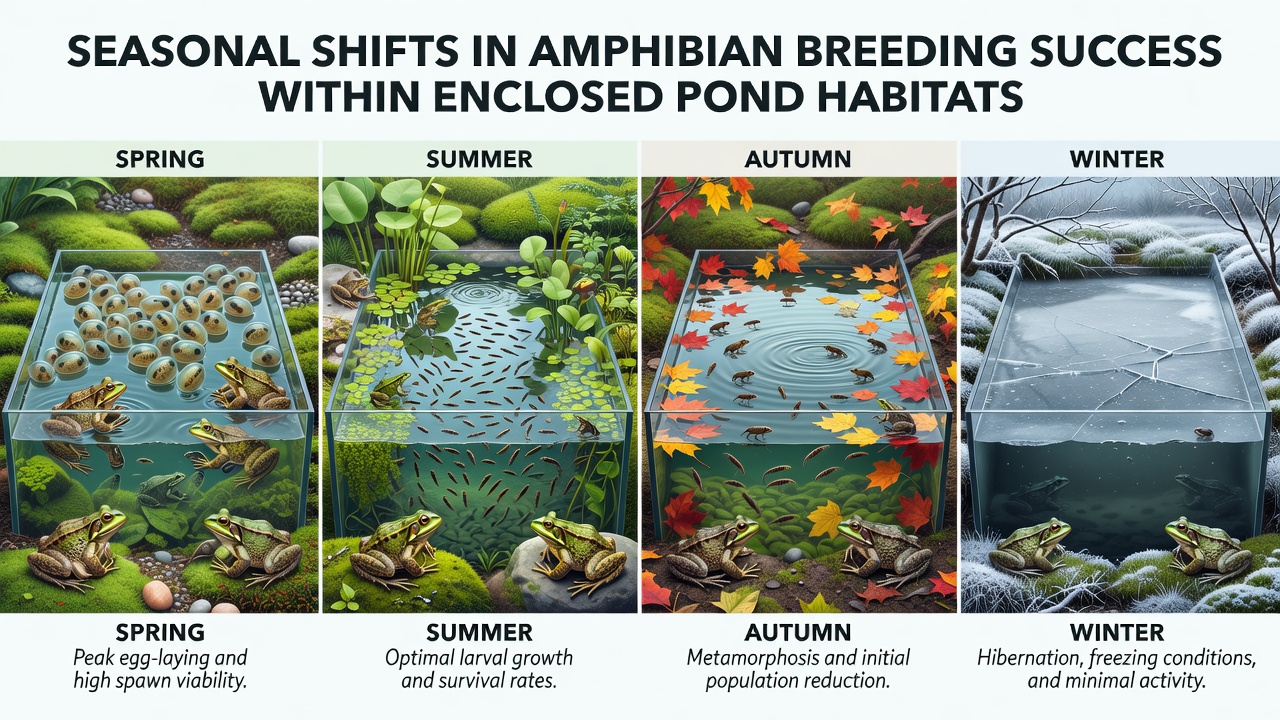
Enclosed pond habitats present unique conditions for amphibian breeding cycles because these isolated water bodies limit external water inflows and create distinct microclimates that respond directly to seasonal temperature and precipitation patterns. Researchers tracking species such as frogs and salamanders in these settings have documented how spring warming triggers earlier egg-laying while summer droughts can reduce larval survival rates. Data from long-term field stations show that breeding success often peaks when consistent rainfall maintains stable water depths through the critical hatching window.
Temperature Influences on Breeding Timing
Amphibians rely on external temperatures to regulate metabolic processes and reproductive behaviors so shifts in seasonal warmth directly alter when adults migrate to ponds and deposit eggs. Studies conducted across multiple enclosed sites indicate that a rise of just two degrees Celsius in average spring temperatures can advance breeding by one to three weeks. This earlier timing sometimes mismatches with peak insect emergence which leaves newly hatched tadpoles with reduced food sources. Observers note that cooler autumn transitions can extend the active period for certain salamander species allowing late-season breeding attempts before winter sets in.
Water Level Fluctuations and Larval Development
Enclosed ponds experience pronounced water level changes because they lack connections to larger watersheds and depend entirely on local rainfall and evaporation rates. When levels drop rapidly during dry spells the shallow zones that protect eggs from predators shrink and expose clutches to higher predation and desiccation risks. Monitoring programs have recorded that ponds retaining at least forty centimeters of water through June produce significantly higher metamorphosis rates than those that fall below this threshold. Those who've studied these systems know that vegetation along pond edges helps stabilize shorelines and provides cover yet prolonged low water can still stress developing larvae.
Precipitation Patterns and Habitat Stability
Seasonal rainfall distribution shapes the duration of standing water available for complete metamorphosis and researchers have linked consistent spring showers to improved recruitment in multiple enclosed pond networks. Extended dry periods compress the breeding window while heavy late-season storms can flood nests and wash away eggs before they hatch. Figures from regional surveys reveal that ponds with deeper basins buffer against short-term droughts better than shallower ones which drain quickly under intense summer heat. What's interesting is how snowmelt contributions in higher latitudes can offset early-season dryness and sustain breeding activity longer than expected.
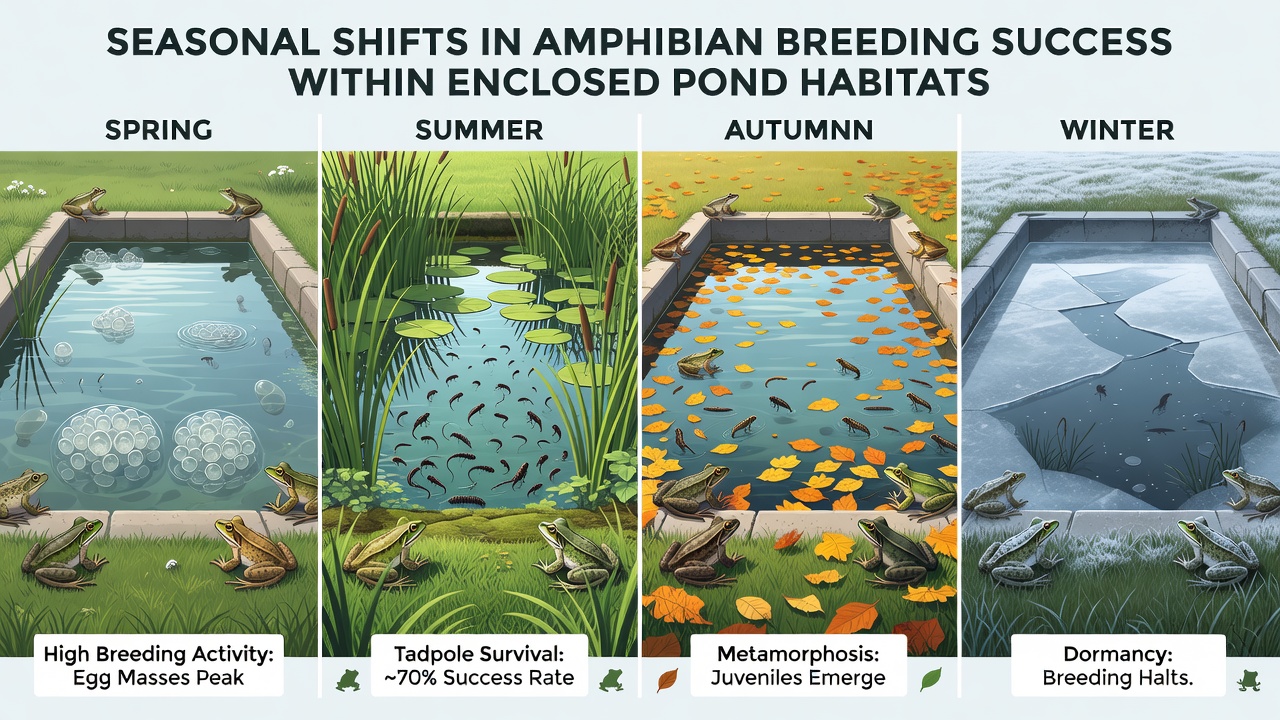
Monitoring efforts continuing through October 2026 have captured additional data on how fall rains recharge ponds after summer drawdowns and support overwintering larvae in deeper refuges. These observations help clarify how climate variability compounds across years to influence population trends.
Species-Specific Responses in Isolated Systems
Different amphibian species exhibit varied tolerances to seasonal shifts within the same enclosed pond and some adapt breeding strategies more readily than others. For instance certain frog populations delay egg deposition until water quality stabilizes after heavy rains whereas salamanders often rely on precise temperature cues that remain consistent year to year. Evidence suggests that species with shorter larval periods complete metamorphosis before water levels decline sharply while those with longer cycles face higher mortality when conditions deteriorate. Take one researcher who noticed that newts in a particular set of ponds shifted to nocturnal activity during hotter summers to conserve moisture and maintain breeding success.
Monitoring Techniques and Data Collection
Long-term studies employ temperature loggers water depth sensors and visual surveys to quantify breeding outcomes across seasons and these tools generate datasets that reveal subtle trends not apparent in short-term observations. According to reports from the US Geological Survey enclosed habitats show more pronounced responses to local weather than open wetlands because external inflows cannot compensate for deficits. Australian environmental records similarly track how altered rainfall regimes affect frog populations in isolated water bodies and provide comparative insights across continents.
Conclusion
Seasonal shifts continue to drive measurable changes in amphibian breeding success within enclosed pond habitats through their effects on temperature water availability and food resources. Ongoing data collection supports better understanding of these dynamics and informs management approaches that maintain suitable conditions for multiple species across varying climate scenarios.