Alex Keller · 7 November 2026
Tracing Atmospheric Inputs as Key Drivers of Chemical Equilibrium in Isolated Pond Systems
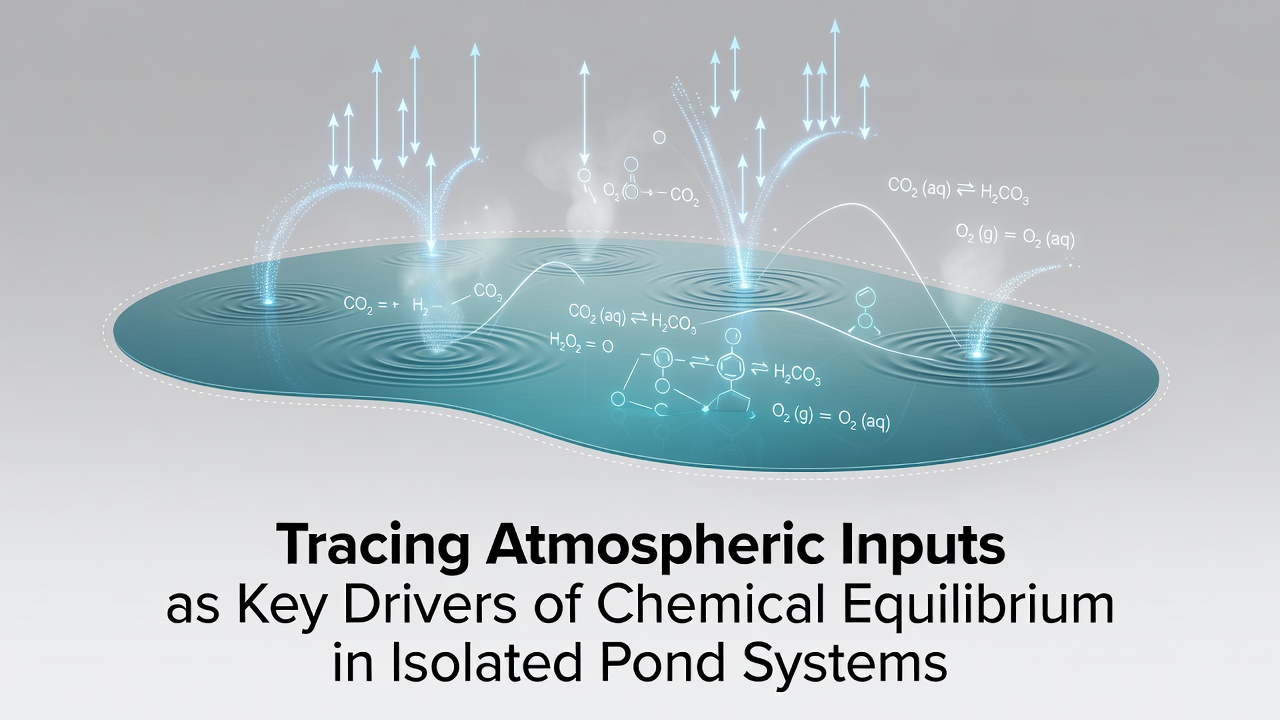
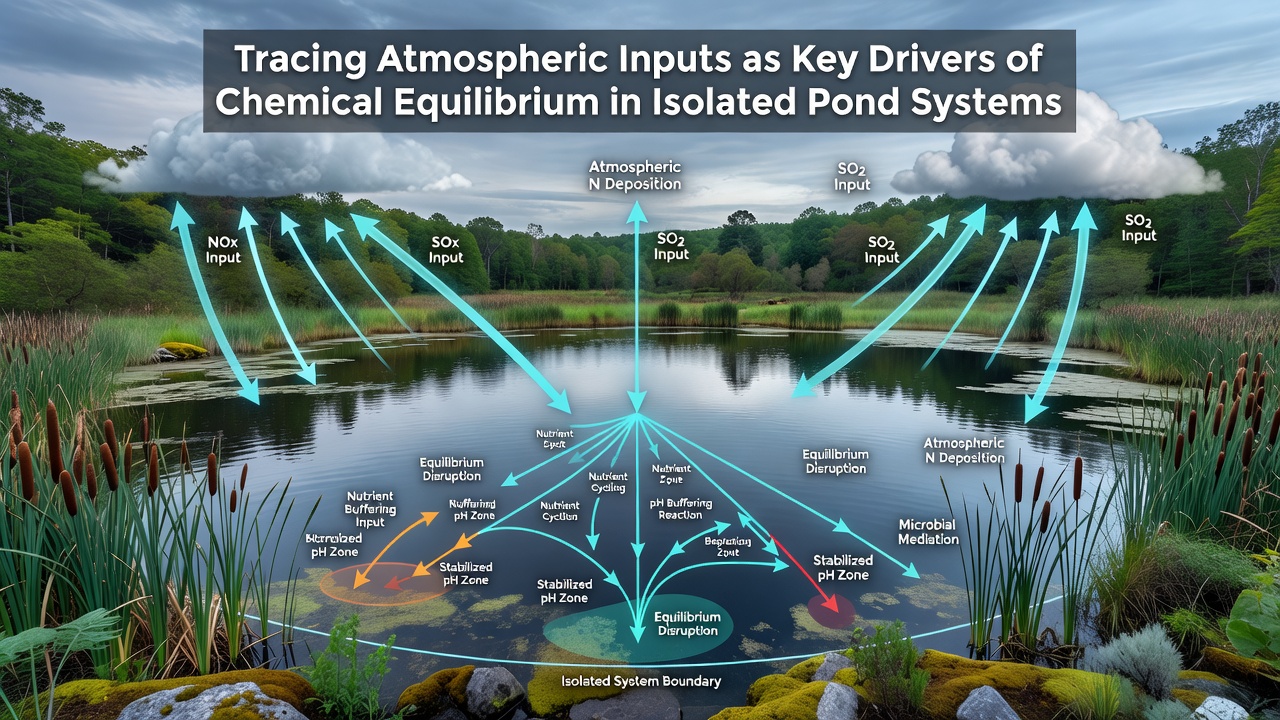
Isolated pond systems receive chemical inputs almost exclusively through atmospheric pathways because they lack significant surface water connections or groundwater exchange. Precipitation carries dissolved gases, aerosols, and particulates that alter pH, nutrient concentrations, and trace metal levels, while dry deposition adds particles during periods without rain. Researchers have documented how these fluxes maintain or shift equilibrium states over seasonal cycles, and data collected through November 2026 continues to refine models that link deposition rates to measured pond chemistry. Atmospheric nitrogen deposition arrives in both oxidized and reduced forms. Wet deposition delivers nitrate and ammonium ions directly into pond water during rainfall events, whereas dry deposition settles ammonia gas and nitric acid aerosols onto the surface. Studies tracking nitrogen budgets in remote ponds show that atmospheric sources can account for the majority of annual nitrogen input when terrestrial runoff remains negligible. Phosphorus arrives primarily through dust particles that originate from agricultural soils or desert regions, and these particles dissolve gradually once they reach the water column.Deposition Processes and Chemical Pathways
Precipitation chemistry varies with air mass origin, and ponds in different geographic zones experience distinct loading patterns. Maritime air masses bring higher chloride and sodium loads, while continental air carries more sulfate and ammonium. Observers note that the timing of deposition events influences equilibrium because concentrated pulses during storms produce temporary pH drops that later stabilize through buffering reactions with dissolved inorganic carbon.
Dry deposition rates depend on wind speed, particle size, and surface roughness of the water. Fine aerosols remain suspended longer yet settle efficiently onto calm pond surfaces, while coarser particles fall quickly near source regions. Chemical transformations occur after deposition: sulfur dioxide oxidizes to sulfate, and nitrogen oxides convert to nitric acid, both of which contribute to acidification until bicarbonate and carbonate species re-equilibrate the system.Observed Effects on Pond Chemistry
Long-term monitoring networks record rising nitrate concentrations in ponds located downwind of industrial and agricultural areas, while remote sites show slower but measurable increases tied to transboundary pollution. Calcium and magnesium ions supplied by dust deposition help counteract acidification, yet aluminum mobilization from surrounding soils can offset that benefit once pH falls below critical thresholds. Carbonate equilibrium responds to both direct carbon dioxide exchange at the air-water interface and indirect effects from nutrient-stimulated photosynthesis that shifts dissolved inorganic carbon speciation.
 Trace metal inputs such as lead, mercury, and cadmium reach ponds through both wet and dry pathways. Mercury deposited from the atmosphere undergoes methylation within anoxic sediments, and the resulting methylmercury bioaccumulates even though external loading remains modest. Researchers tracking mercury isotopes have traced more than seventy percent of the mercury burden in certain isolated ponds to atmospheric sources rather than local geology.
Monitoring and Modeling Approaches
Scientists deploy bulk precipitation collectors alongside automated wet-only samplers to separate wet and dry contributions. Ion chromatography and inductively coupled plasma mass spectrometry provide the analytical precision needed to detect low-level changes in pond water chemistry. Process-based models incorporate deposition velocity parameters, aqueous speciation constants, and gas exchange coefficients to simulate how atmospheric forcing maintains or perturbs steady-state conditions. Validation against field measurements collected across multiple seasons improves confidence in projections that extend into the late 2020s.
International data sets compiled by agencies such as the US Environmental Protection Agency and the Australian Bureau of Meteorology supply regionally specific deposition estimates that feed into pond-scale simulations. These combined records reveal that reductions in sulfur emissions have allowed some recovery in alkalinity, yet nitrogen deposition continues to exert pressure on nutrient-limited systems.Conclusion
Atmospheric inputs function as primary controls on chemical equilibrium in isolated pond systems by delivering acids, nutrients, and metals that interact with existing water chemistry. Continued measurement programs and refined deposition models provide the quantitative foundation needed to anticipate how future changes in emission patterns will alter pond conditions. Data extending through November 2026 underscore the ongoing relevance of atmospheric pathways when surface and groundwater influences remain minimal.